
Quick Answer: Sodium taurodeoxycholate (STDC; taurodeoxycholic acid sodium salt, CAS 1180-95-6) is a taurine-conjugated, anionic bile salt detergent used in biochemistry and cell biology to solubilize membranes, extract integral membrane proteins, and study bile acid signaling. It forms mixed micelles above its critical micelle concentration (CMC). Order research-grade material with COA from Sodium Taurodeoxycholate / Taurodeoxycholic acid sodium salt (CAS 1180-95-6).
What Is Sodium Taurodeoxycholate?
Sodium taurodeoxycholate (also searched as sodium taurodeoxycholic acid or STDC) is the sodium salt of taurodeoxycholic acid — a dihydroxy, taurine-conjugated bile acid. Molecular formula C₂₆H₄₄NNaO₆S (MW ~521.7 g/mol). Suppliers list it under synonyms including taurodeoxycholic acid sodium salt, sodium deoxytaurocholate, and sodium taurodeoxycholate hydrate depending on lot form.
In the lab, STDC behaves as a mild-to-moderate anionic detergent: hydrophobic face associates with lipid bilayers; the taurine-sulfonate headgroup maintains water solubility at neutral pH. That combination makes it a workhorse for membrane protein biochemistry without always requiring synthetic detergents such as CHAPS.
Names, CAS, and Search Synonyms
| Term | Notes for purchasing & literature search |
|---|---|
| Sodium taurodeoxycholate | Most common reagent catalog name |
| Taurodeoxycholic acid sodium salt | IUPAC-style listing; same CAS 1180-95-6 |
| STDC / TDCA-Na | Abbreviations in protein purification protocols |
| Sodium taurodeoxycholate hydrate | May indicate bound water; check COA & formula weight |
| Sodium deoxytaurocholate | Legacy synonym — confirm structure before substituting |
Why Labs Choose STDC
- Membrane protein solubilization — mitochondrial inner membrane, transporters, receptors
- Mixed micelle reconstitution — combine with phospholipids for functional assays
- Cell lysis & membrane permeabilization — controlled detergent exposure in plate assays
- Bile acid metabolism research — FXR/TGR5 and related signaling readouts
- Pharmaceutical R&D — bile-acid conjugate and micellar delivery models
Need side-by-side detergent selection? See Sodium Taurodeoxycholate vs Sodium Taurocholate and the full workflow guide Bile Salts in Biochemistry: Solubilization & Micelles.

Typical Lab Uses (Research Only)
| Application area | How STDC is used | Validate in your SOP |
|---|---|---|
| Membrane protein extraction | Add STDC above CMC during homogenization or detergent swap | Protein activity & yield vary by target |
| Mitochondrial prep | Gentle solubilization of inner membrane complexes | Optimize detergent:protein ratio |
| Lipid reconstitution | Form mixed micelles with phospholipid | Dialyze or bind to resin to remove detergent |
| Cell-based assays | Short detergent pulses for permeabilization | Cytotoxicity & assay interference checks |
| Analytical biochemistry | Sample prep for chromatography or MS | Remove or exchange detergent before injection |
Physical Form & What to Expect on Receipt
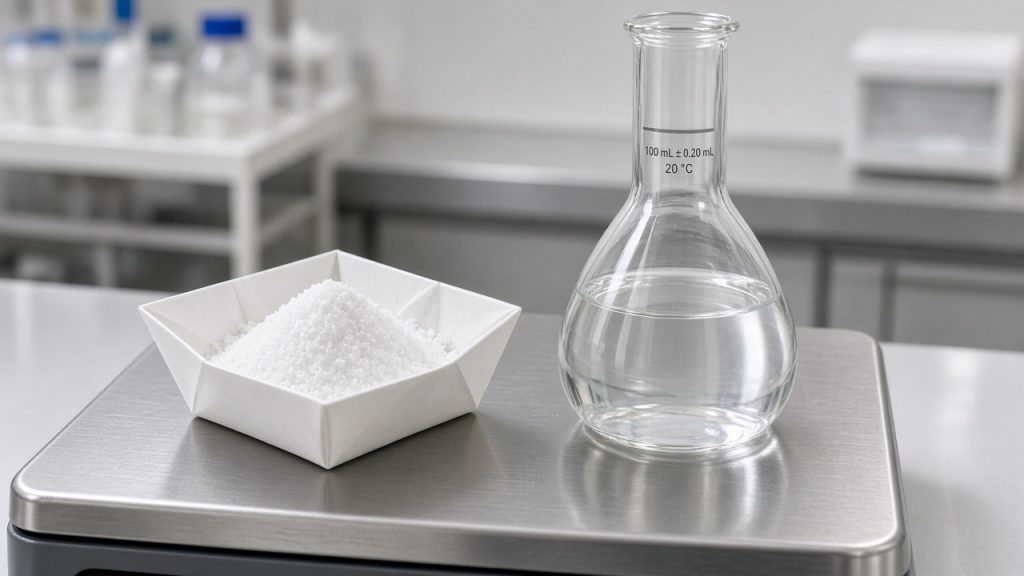
Commercial STDC is typically a white to off-white crystalline powder, moderately hygroscopic. Literature solubility reports clear aqueous solutions up to ~0.5 M at 20 °C. Optical rotation and HPLC purity appear on most supplier COAs — compare specs in Specs Buyers Ask for CAS 1180-95-6.
Getting Started in Your Lab
- Confirm grade and hydrate status on the COA; request quote via Sodium Taurodeoxycholate / Taurodeoxycholic acid sodium salt (CAS 1180-95-6).
- Review Powder Storage & Moisture Control before opening.
- Prepare stock using Solution Preparation Guide.
- Set working concentrations from Typical Concentrations for Assays (literature starting ranges).
FAQ
Is sodium taurodeoxycholate the same as taurodeoxycholic acid sodium salt?
Yes — both refer to the sodium salt of taurodeoxycholic acid with CAS 1180-95-6. Always match CAS and structure, not just trade name.
Is STDC the same as sodium deoxycholate?
No. STDC is taurine-conjugated deoxycholic acid; sodium deoxycholate is the unconjugated bile acid salt. Conjugation changes solubility, CMC, and precipitation behavior.
Can I use STDC in cell culture?
Some protocols use bile salts for permeabilization or signaling studies. Use cell-culture-tested or endotoxin-qualified lots when required, and validate cytotoxicity for your cell line.
What purity should I buy for membrane protein work?
Many labs start at ≥97–98% HPLC research grade. Sensitive structural studies may need higher purity or detergent polishing — see Buying Guide: Purity, Hydrate & COA.
Does hydrate form change my calculations?
If the catalog lists a hydrate, use the batch formula weight on the COA when converting mass to molarity. Do not assume anhydrous MW if water of hydration is present.
Related Resources
- Sodium Taurodeoxycholate / Taurodeoxycholic acid sodium salt (CAS 1180-95-6)
- Sodium Taurodeoxycholate vs Sodium Taurocholate
- How to Prepare STDC Solutions (CAS 1180-95-6)
- Typical Concentrations for Cell & Membrane Assays
- Bile Salt Powder Storage & Moisture
- Buying Guide: Purity, Hydrate & COA
- Contact Monuo for COA / quote
Disclaimer
This article is for research and laboratory use information only. It does not constitute medical, diagnostic, or therapeutic advice. Verify all concentrations, grades, and handling steps against your institution’s SOP, SDS, and primary literature before use in regulated or clinical-adjacent workflows.