
Ingenol chemical properties matter to anyone sourcing a tetracyclic diterpene from Euphorbia peplus for natural-product research or intermediate studies. Ingenol (CAS 30220-46-3) is the parent ingenane alcohol behind many esters discussed in phytochemistry literature – including ingenol mebutate (ingenol 3-angelate), which is a distinct ester derivative, not the same molecule as ingenol itself.
This rewrite focuses on what buyers and chemists actually look up: ingenol CAS number, molecular formula, physical form, solubility habits, PKC-related research context, and how to keep purchasing files clear when RFQs mix “ingenol” with “ingenol mebutate.”
What Is Ingenol? Quick Chemical Identity
Ingenol is a highly oxygenated tetracyclic diterpene in the phorboid / ingenane family. It was isolated decades ago as a parent scaffold shared by dozens of naturally occurring ingenanes that keep the same carbon skeleton but differ at peripheral functional groups. The architecture includes an unusual bridged ring system that has attracted total-synthesis interest since the 1980s.
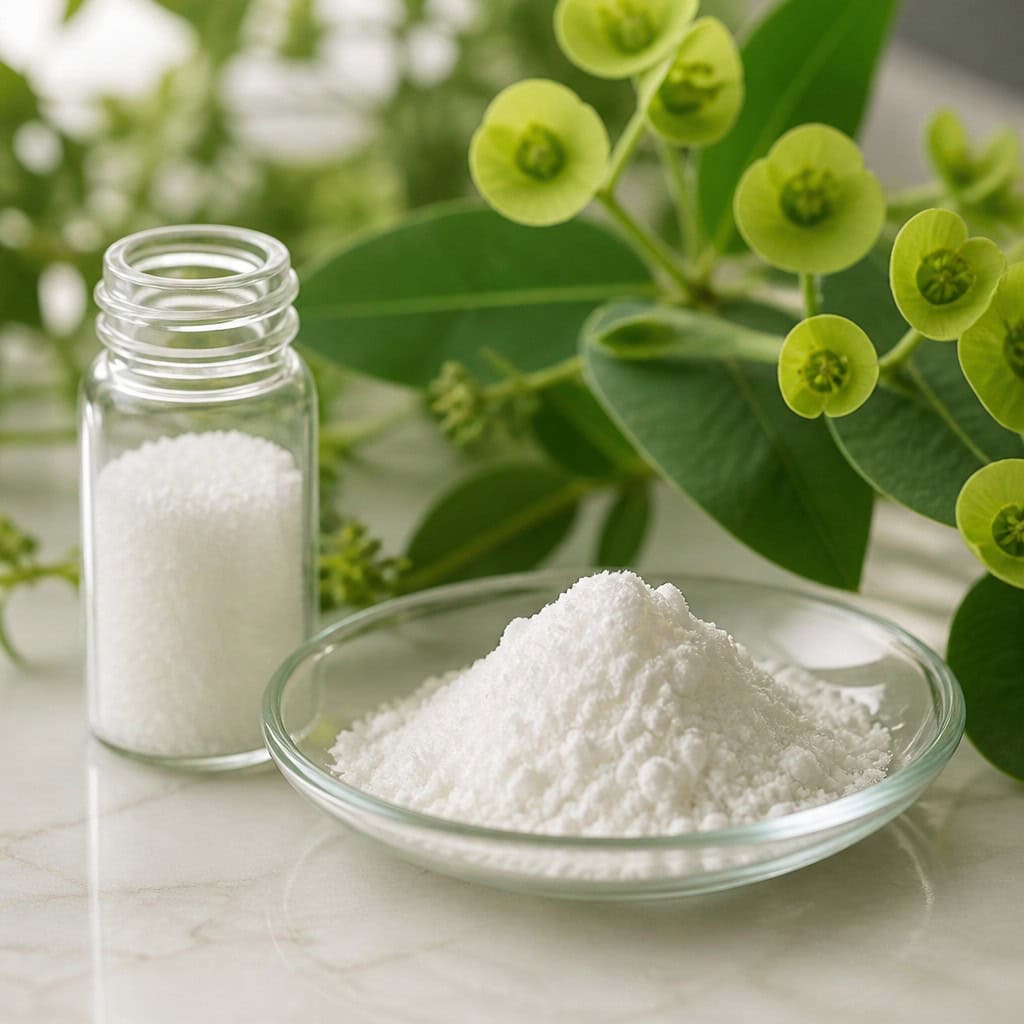
Botanically, ingenol is associated with Euphorbia peplus (petty spurge/radium weed) and related Euphorbiaceae materials. For purchasing, always match CAS 30220-46-3 on the COA before assuming a catalog nickname is correct.
| Product / common name | Ingenol |
| CAS Number | 30220-46-3 |
| Molecular formula | C20H28O5 |
| Molecular weight | About 348.4 g/mol |
| Chemical class | Tetracyclic diterpene (ingenane / phorboid family) |
| Typical appearance | Crystalline solid/white to off-white solid (lot-dependent) |
| Typical commercial purity | 98% (HPLC); custom assay available |
| Related but different CAS | Ingenol mebutate / ingenol 3-angelate: CAS 75567-37-2 |
| Primary sourcing use | Research chemical / botanical diterpene intermediate |
Ingenol Chemical Properties Buyers Ask About Most
1. Structure and functional groups
At the center of ingenol chemical properties is the ingenane tetracycle with multiple oxygenated sites, including hydroxyl groups that enable ester formation. That is why the literature often discusses ingenol esters as a family: the parent alcohol (ingenol) can be functionalized at selected hydroxyl positions to change polarity, PKC interaction profiles, and handling behavior.
A long-tail search many chemists type is ingenol structure C20H28O5 or ingenol tetracyclic diterpene scaffold. Keep those identity strings on your RFQ together with CAS 30220-46-3.
2. Physical and handling properties
Commercial research lots are commonly supplied as a crystalline solid. Cayman-style technical notes describe solubility in organic solvents such as ethanol, DMSO, and DMF, with more limited aqueous behavior depending on pH and co-solvent strategy. Because diterpenes of this class can be sensitive to storage conditions, sealed, cold, light-protected storage is widely recommended; confirm lot-specific guidance on the TDS and SDS.
- Confirm appearance and assay on the batch COA
- Record solvent system used for stock solutions
- Avoid repeated warm-humid open-bin exposure
- Align sample and bulk specification in writing before scale-up
3. Relationship to protein kinase C (research context)
In biochemical literature, ingenol is discussed as a protein kinase C (PKC) ligand / activator-class diterpene related to the phorbol ester pharmacophore story. Published in vitro values often cited for ingenol include approximate Ki around 30 uM and ED50 around 27 uM in selected assay systems – numbers that belong in a research notebook, not in consumer product claims.
Important nuance for SEO and compliance alike: many ingenol esters are described as tumor-promoting in classical phorbol-type literature, while selected esters such as ingenol mebutate have been studied in very different topical pharmaceutical contexts. Ester pattern changes biology. Do not treat “ingenol” and “ingenol mebutate” as interchangeable on a PO.
Ingenol vs Ingenol Mebutate: A Long-Tail Distinction That Prevents Wrong Orders
One of the highest-value long-tail topics around this page is the ingenol vs ingenol mebutate chemical difference.
| Item | Ingenol | Ingenol mebutate (example ester) |
| CAS | 30220-46-3 | 75567-37-2 |
| Formula (approx.) | C20H28O5 | C25H34O6 |
| MW (approx.) | ~348.4 | ~430.5 |
| What it is | Parent ingenane alcohol | 3-Angelate ester of ingenol (also called ingenol 3-angelate) |
If your project needs the parent scaffold for synthetic elaboration, ask for ingenol CAS 30220-46-3. If your literature brief is specifically about ingenol 3-angelate / ingenol mebutate, specify that CAS separately. Mixing the names is one of the fastest ways to receive the wrong botanical diterpene.
Where Ingenol Fits in Natural-Product and Intermediate Research
Search intent for ingenol chemical properties is usually informational and commercial-research, not retail. Typical use cases include:
- Reference standard / analytical identity work for Euphorbia diterpenes
- Starting point for ester analog synthesis and SAR exploration
- Comparative natural-product studies within the ingenane family
- Literature follow-up on PKC-related diterpene scaffolds
Monuo Chem supplies botanical extracts and related research materials for B2B projects. Finished pharmaceutical positioning, labeling, and any regulated product development remain the customer’s responsibility. This article does not provide medical advice and does not promote treat, cure, or drug claims for raw ingenol powder.
Quality Specs to Put on an Ingenol RFQ
To make quotes comparable, write a short specification block:
- Name: Ingenol
- CAS: 30220-46-3
- Formula check: C20H28O5
- Purity target: 98% HPLC (or your custom window)
- Appearance: crystalline / powder as agreed
- Documents: COA, TDS, MSDS / SDS
- Clarify: not ingenol mebutate CAS 75567-37-2 unless separately requested
- Pack size and destination for logistics
Monuo Chemical supplies research- and botanical-grade materials with COA, MSDS, and formulation support. Custom assay and packing can be discussed per project.
Request a quotation for Ingenol (CAS 30220-46-3) via the contact / request a quote page, or browse related plant extracts.
Storage and Laboratory Handling Notes
Treat ingenol like other sensitive natural-product solids:
- Keep sealed, dry, and protected from light and heat
- Follow the lot SDS for PPE and waste rules
- Prepare solutions fresh when practical; document solvent and concentration
- Do not assume powder stability equals solution stability
FAQ: Long-Tail Questions Around Ingenol Chemical Properties
1. What is the CAS number of ingenol?
Ingenol is commonly identified as CAS 30220-46-3. Always confirm on the COA.
2. What is the molecular formula of ingenol?
Ingenol is generally listed as C20H28O5 with a molecular weight near 348.4 g/mol.
3. What are the key ingenol chemical properties for purchasing?
Focus on CAS identity, HPLC purity, appearance, storage guidance, and clear separation from ester derivatives such as ingenol mebutate.
4. Is ingenol the same as ingenol mebutate?
No. Ingenol is the parent alcohol (CAS 30220-46-3). Ingenol mebutate is an ester derivative (commonly CAS 75567-37-2) with a different formula and molecular weight.
5. Where does ingenol come from?
It is a diterpene associated with Euphorbia peplus and related Euphorbiaceae sources. Commercial lots should still be purchased by CAS and assay, not by plant nickname alone.
6. Where can I inquire about Ingenol CAS 30220-46-3?
Contact Monuo Chem for Ingenol (CAS 30220-46-3) documentation and quotation support.
Conclusion
A useful page on ingenol chemical properties should do three jobs: lock CAS 30220-46-3 and C20H28O5 identity, explain the diterpene / ingenane context, and prevent mix-ups with ingenol mebutate. Get those right, and R&D and procurement spend less time correcting wrong SKUs and more time on the actual experiment.
Monuo Chemical supplies research- and botanical-grade materials with COA, MSDS, and formulation support.
Related Reading
- Plant extracts category – Monuo Chem
- What are the applications of Astragaloside (CAS No. 84687-43-4)?
- What Does Madecassoside Do For Skin?
- Contact / Request a Quote
Disclaimer
Information is for botanical raw-material identification and technical reference only. It is not medical advice. Literature mentions of related esters or historical pharmaceutical products do not authorize treat, cure, or drug claims for ingenol raw material. Finished-product claims and regulatory filings remain the customer’s responsibility. Verify each lot against the supplied COA and SDS.