
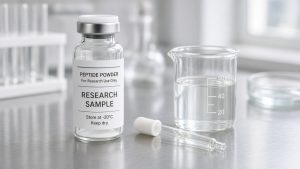
Quick Answer: Store Syn-Ake raw material (Dipeptide Diaminobutyroyl Benzylamide Diacetate, CAS 823202-99-9) as a sealed, cool, dry peptide powder or supplier solution per COA — typically 2–8 °C refrigerated or ≤25 °C per label, protected from light and moisture. Opened containers should be purged, closed immediately, and logged with open date. Do not assume room-temperature indefinite storage for every lot; follow the supplier TDS and retest date on your COA.
Powder vs Pre-Diluted Solution Storage
| Form from supplier | Typical storage | Opened-container practice |
|---|---|---|
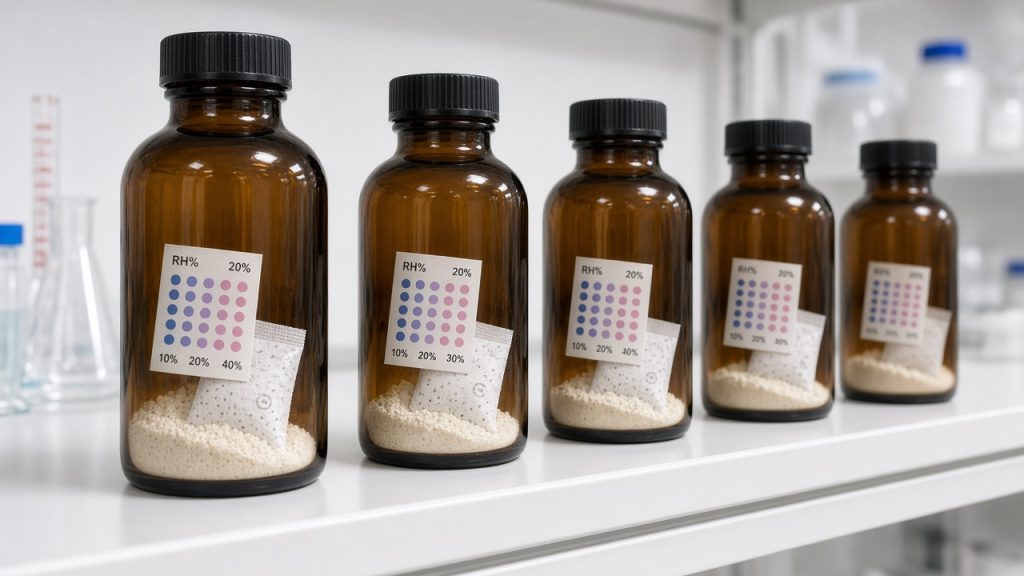
| Lyophilized / powder diacetate | Cool, dry, sealed; desiccant in humid sites | Minimize headspace; weigh quickly; reseal with inert gas if SOP requires |
| Aqueous peptide solution (e.g., ~0.5% active in glycerin/water) | Often refrigerated; protect from freeze-thaw abuse | Use within supplier-stated period after opening |
| Aliquoted lab stock | Single-use vials reduce contamination risk | Label concentration basis (active vs solution) |
Shelf Life: What QA Should Track
- Manufacturing date and retest/expiry on COA
- Assay / purity at receipt and optionally at retest
- Water content for powders in humid climates
- Appearance (color change, clumping, unusual odor)
- Micro if you repack or dilute in-house
Manufacturing traceability topics overlap with Syn-Ake manufacturing & QC. For in-lab dilution after receipt, see working solution preparation.
Packaging and Shipping Considerations
| Stage | Guidance |
|---|---|
| Incoming QC | Match PO to CAS 823202-99-9, INCI, form (powder/solution), and assay |
| Warehouse | Avoid heat spikes near loading docks; inventory FIFO |
| Export / long transit | Insulated shippers for summer lanes if supplier recommends cold chain |
| Production weigh-up | Use clean, dry tools; no steam exposure on open powder |
| Return / rework | Do not mix unknown lots — peptide identity must stay traceable |
Moisture, Light, and Contamination
Peptide diacetate salts are hygroscopic compared with many small-molecule actives. Humidity causes weighing errors, clumping, and potential microbial growth if water activity rises. Amber or opaque inner liners help if the supplier specifies light protection.
FAQ
Can Syn-Ake powder sit at room temperature?
Only if your supplier COA/TDS allows it for that lot. Many peptide houses specify cool storage — do not override without data.
How long is an opened peptide solution good?
Follow the supplier open-jar or diluted-stock guidance — often weeks to a few months refrigerated, lot-specific.
Should we freeze Syn-Ake?
Freezing aqueous peptide solutions can stress some formulations unless validated. Do not freeze without supplier approval.
What if the powder clumped?
Review moisture exposure. Soft clumps may be usable after careful handling; discolored or odorous lots should be quarantined.
Does packaging affect shelf life in finished goods?
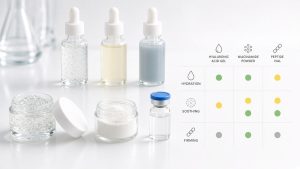
Yes — airless pumps and opaque bottles extend peptide stability in serums. That is separate from raw storage but linked in stability studies.
Related Resources
- What is Dipeptide Diaminobutyroyl Benzylamide Diacetate (Syn-Ake)?
- The Science Behind Syn-Ake (CAS 823202-99-9)
- Formulating Syn-Ake: Use Level, pH, Cool-Down & Argireline Pairing
- Writing Honest Syn-Ake Claims Language
- Syn-Ake Manufacturing & Quality Control
- Syn-Ake in Expression-Line Cosmetics
- Dipeptide Diaminobutyroyl Benzylamide Diacetate product page (CAS 823202-99-9)
- Cosmetic peptides category
- Contact Monuo Chemical for COA / quotation
- Syn-Ake working solution prep lab guide
- Syn-Ake OEM sourcing checklist
Disclaimer
This page is for cosmetic formulation education and B2B sourcing context. Use levels cited are typical literature or supplier-range starting points, not guaranteed recipes. Finished-product claims, labeling, and regulatory compliance remain the customer’s responsibility. Verify each lot against the supplied COA and SDS. Do not use medical, injectable, or drug claim language for topical peptide marketing.