
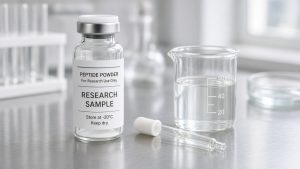
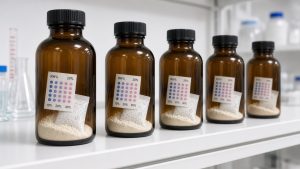
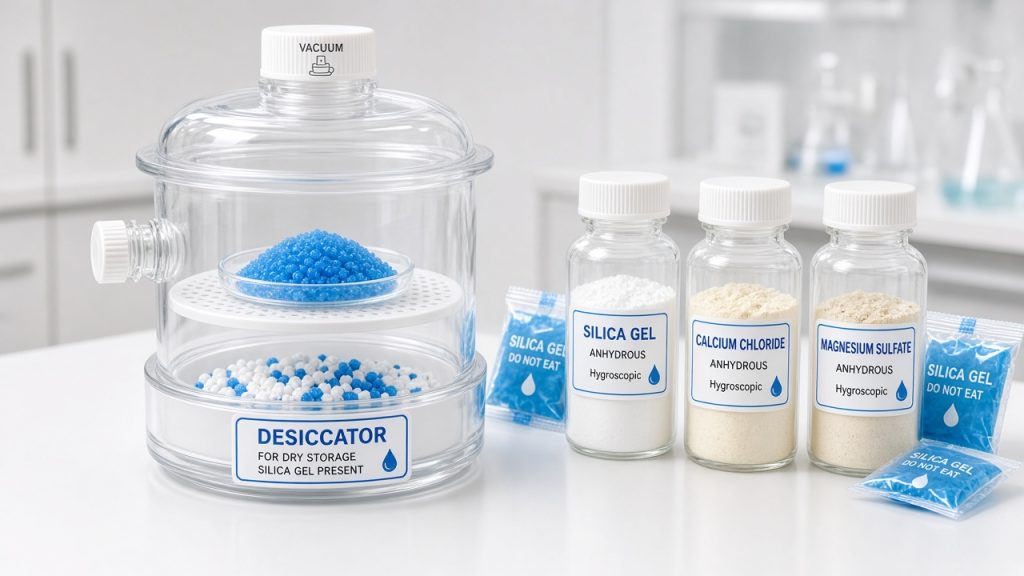
Quick Answer: Store sodium taurodeoxycholate (CAS 1180-95-6) as a dry powder tightly sealed, protected from moisture and light, preferably under inert atmosphere (N₂/Ar) at 15–25 °C or −20 °C for long-term retention. After opening, minimize exposure at the balance, use desiccant strategies consistent with your SOP, and reconstitute only the quantity needed. Typical supplier shelf life: 24 months sealed — confirm on COA.
Why Moisture Control Matters
STDC is moderately hygroscopic. Moisture uptake causes clumping, weight gain (throwing off molar calculations), and potential degradation over time. Hydrate catalog listings may already include bound water — distinguish storage moisture uptake from manufactured hydrate form using the COA (Specs Buyers Ask).
Powder Storage Matrix
| Factor | Recommendation | Rationale |
|---|---|---|
| Container | Original HDPE/glass; tightly closed | Minimize moisture & oxidation |
| Atmosphere | N₂ or Ar blanket for long-term | Supplier guidance for research grade |
| Temperature | RT short-term; −20 °C multi-year | Reduces chemical drift |
| Light | Dark cabinet or amber bottle | Light-sensitive per many SDS sheets |
| Humidity | Desiccator or low-RH weighing room | Prevent clumping & weight error |
| Shelf life | Often 24 months unopened | Verify manufacture & retest date on COA |
After Opening: Weighing & Aliquot Strategy
- Equilibrate sealed bottle to room temperature before opening (reduce condensation).
- Pre-label tubes for stock solutions or single-use powder aliquots.
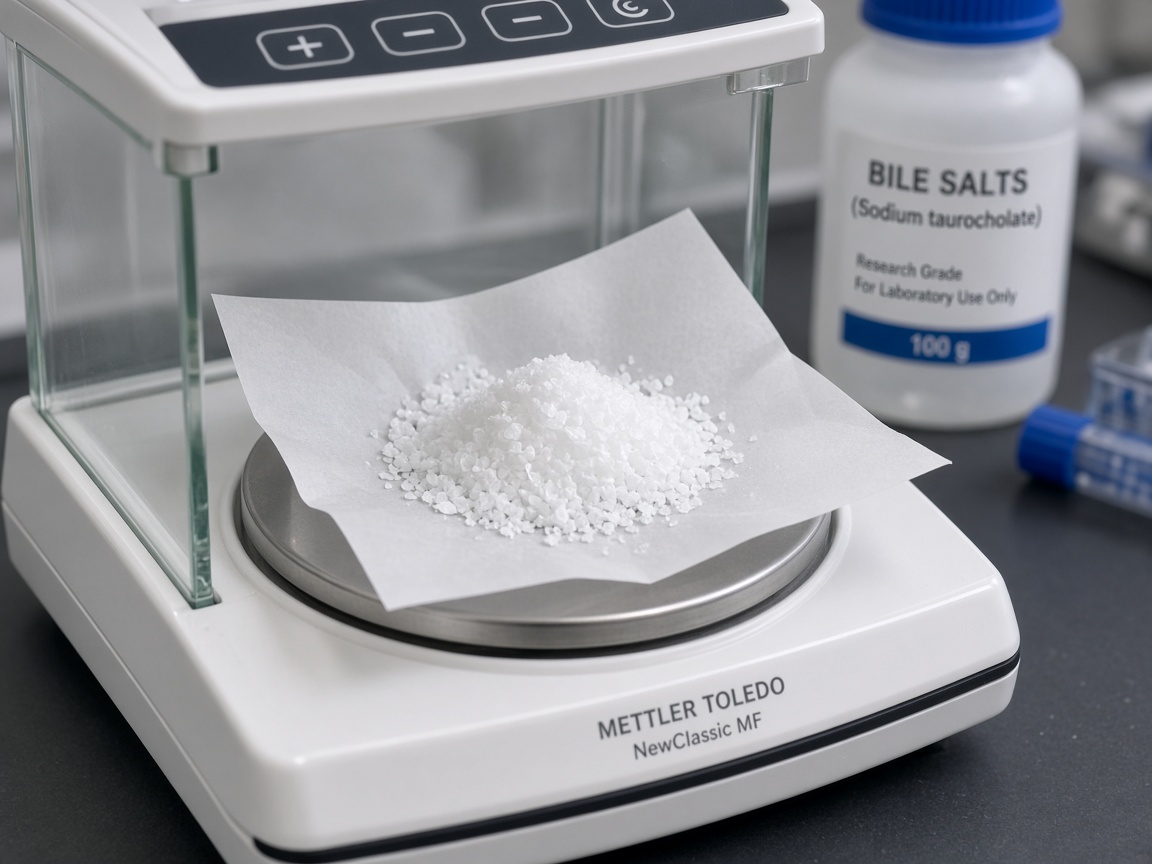
- Weigh quickly; do not leave powder exposed on spatula or weigh boat.
- Reseal with fresh desiccant if your SOP uses storage bags.
- Log open date in LIMS or inventory system.
Reconstitution & Solution Storage
Prepare solutions per Solution Preparation Guide. Store liquid aliquots frozen if SOP allows; avoid repeated warm–cool cycles. Protect from light; verify clarity before each use.
| Format | Storage hint | Before use |
|---|---|---|
| Dry powder (sealed) | RT or −20 °C per COA | Check appearance & COA retest |
| High mM stock | Fridge or −20 °C aliquots | Mix gently; inspect for precipitate |
| Dilute working solution | Prepare fresh preferred | Discard if cloudy or discolored |
Signs of Moisture or Degradation
- Hard clumps that do not break up cleanly
- Weight drift vs expected aliquot on analytical balance
- Off-color solution beyond faint yellow at high mM
- Precipitate in previously clear stock
If spec is uncertain, request a fresh COA or quote replacement via Sodium Taurodeoxycholate / Taurodeoxycholic acid sodium salt (CAS 1180-95-6) or Contact.
FAQ
Should STDC be stored in the freezer?
Powder: −20 °C is acceptable for long-term if sealed and moisture-free. Solutions: freeze aliquots if validated in your lab.
Can I use a desiccant pack in the bottle?
Only if compatible with supplier packaging guidance — avoid contaminating powder. Desiccator storage is a common lab alternative.
Does vacuum storage help?
Reducing headspace moisture can help if done without disturbing sealed integrity. Inert gas blanket is often simpler.
How does hydrate form affect storage?
Manufactured hydrate has defined water content; extra moisture uptake still changes weighing accuracy — always store sealed and dry.
Related Resources
- How to Prepare Solutions
- Buying Guide: Hydrate & COA
- Specs Buyers Ask
- Sodium Taurodeoxycholate / Taurodeoxycholic acid sodium salt (CAS 1180-95-6)
- What Is STDC?
Disclaimer
This article is for research and laboratory use information only. It does not constitute medical, diagnostic, or therapeutic advice. Verify all concentrations, grades, and handling steps against your institution’s SOP, SDS, and primary literature before use in regulated or clinical-adjacent workflows.