
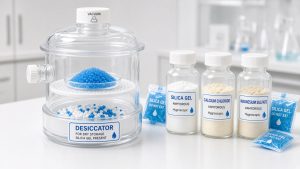
Bile Salt Powder Storage, Moisture & Reconstitution (Sodium Taurodeoxycholate CAS 1180-95-6)
Store STDC dry and sealed: hygroscopic powder handling, inert atmosphere, −20 °C options, reconstitution aliquots, and signs of moisture damage.
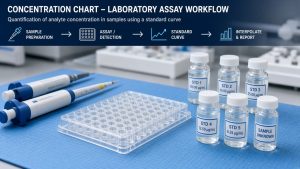
Taurodeoxycholate Typical Concentrations for Cell & Membrane Assays (CAS 1180-95-6)
Literature starting ranges for STDC mM use: CMC, membrane solubilization, cell permeabilization, and dilution examples — validate with your SOP.

Buying Guide: Sodium Taurodeoxycholate Purity, Hydrate Form & COA (CAS 1180-95-6)
Procurement guide for STDC: CAS identity, HPLC grades, hydrate vs anhydrous, COA checklist, packaging MOQ, and vendor qualification for research labs.

Taurodeoxycholic Acid Sodium Salt Specs Buyers Ask (CAS 1180-95-6)
COA specification reference for taurodeoxycholic acid sodium salt: HPLC purity, MW, optical rotation, hydrate, safety lines, and application-specific modules.
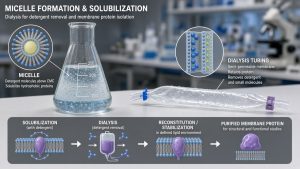
Bile Salts in Biochemistry: Solubilization, Micelles & Lab Workflow with STDC (CAS 1180-95-6)
End-to-end bile salt workflow: membrane isolation, STDC solubilization above CMC, mixed micelles, purification, detergent exchange, and downstream assay tips.
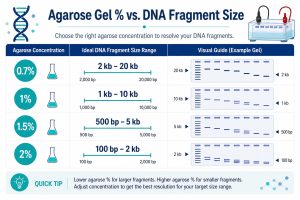
Agarose Gel Concentration Chart: Quick Formulas by DNA Fragment Size (CAS 9012-36-6)
Agarose percentage quick reference for DNA fragment sizes: 0.5–3% gels, when to adjust thickness or buffer, with CAS 9012-36-6 workflow links.
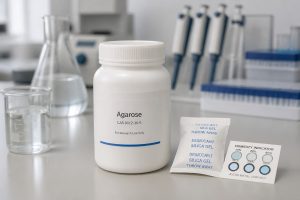
Agarose Powder Storage & Rehydration: Moisture, Clumping & Repeated Heating (CAS 9012-36-6)
How to store agarose powder CAS 9012-36-6, prevent moisture uptake and clumping, dissolve cleanly, and limit quality loss from repeated melt–recast cycles.

Low-EEO Agarose Explained: When to Use Low Electroendosmosis Grades (CAS 9012-36-6)
What low-EEO agarose means, how electroendosmosis affects DNA migration, and when labs should choose low-EEO grades for agarose CAS 9012-36-6 gels.