
If you’ve spent any time in the natural products literature, you’ve probably run into triptolide — it keeps showing up in study after study, and for good reason. Isolated from Tripterygium wilfordii Hook.f., a plant known in Chinese medicine as Thunder God Vine, this diterpenoid triepoxide hits multiple inflammatory targets at nanomolar concentrations. That kind of potency is unusual for a natural compound, and it’s part of why triptolide (CAS 38748-32-2) has attracted so much attention from both academic labs and pharma companies.
In this article, I’ll walk through what we know about how triptolide actually works at the molecular level, where the research is heading, and what anyone sourcing or studying this compound needs to keep in mind.
What Is Triptolide?
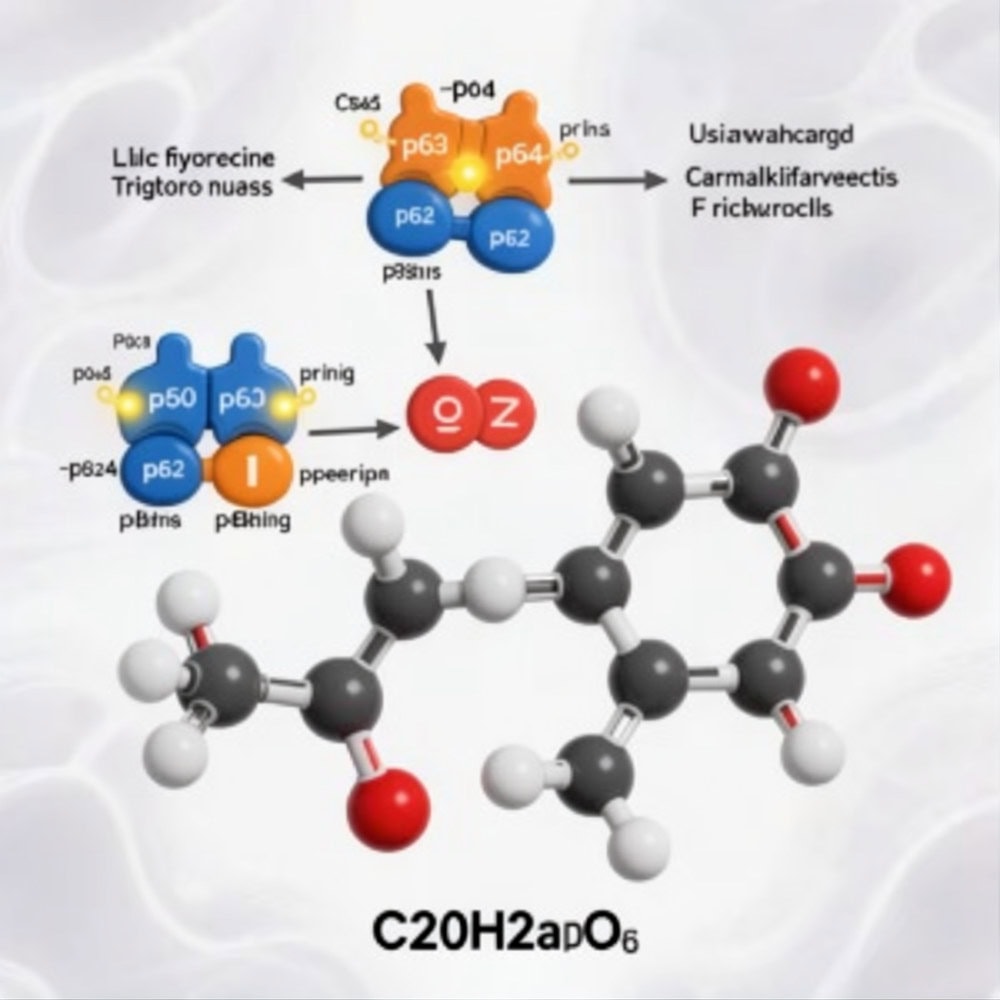
Triptolide was first extracted from Tripterygium wilfordii roots back in 1972. It’s a diterpenoid triepoxide — molecular formula C₂₀H₂₄O₆, molecular weight 360.4 g/mol — and it’s not the easiest molecule to work with. The three epoxy rings in its structure are chemically reactive, which is exactly what makes it biologically active (and, as we’ll see, part of what makes it tricky from a safety standpoint).
Those epoxy groups form covalent bonds with target proteins, most notably the XPB subunit of the transcription factor IIH (TFIIH) complex. That particular interaction turns out to be central to much of what triptolide does — both the good and the bad.
Chemical Profile of Triptolide (CAS 38748-32-2)
| Property | Detail |
|---|---|
| CAS Number | 38748-32-2 |
| Molecular Formula | C₂₀H₂₄O₆ |
| Molecular Weight | 360.4 g/mol |
| Source | Tripterygium |
| Classification | Diterpenoid triepoxide |
| Solubility | DMSO, ethanol; poorly water-soluble |
| Appearance | White to off-white crystalline powder |
How Triptolide Suppresses Inflammation
1. NF-κB Pathway Inhibition
The NF-κB pathway is probably the single most important inflammatory signaling cascade we know of. When something like TNF-α, IL-1β, or LPS triggers it, NF-κB moves into the nucleus and cranks up the expression of over 500 genes — cytokines, chemokines, adhesion molecules, you name it.
Triptolide hits this pathway at two separate points. First, work published in the Journal of Biological Chemistry showed that triptolide directly inhibits the IKK complex, which means IκBα doesn’t get phosphorylated and degraded, so NF-κB stays stuck in the cytoplasm. We’re talking effective concentrations around 10 nM — that’s potent by any standard.
But there’s a second mechanism too. Even when NF-κB does make it into the nucleus, triptolide can block the transcriptional activity of the p65 subunit. So you get a double hit: reduced nuclear translocation AND reduced transcriptional output once it’s there. Not many natural compounds pull that off.
2. Cytokine Suppression
This is where the published data gets really consistent. Across cell models and animal studies, triptolide reliably suppresses the usual suspects:
- TNF-α — In LPS-stimulated macrophages, the IC₅₀ is roughly 5 nM. That puts it among the strongest natural TNF-α inhibitors on record.
- IL-1β — Triptolide blocks NLRP3 inflammasome assembly, which stops IL-1β from maturing in the first place.
- IL-6 and IL-8 — Both drop significantly in fibroblasts and endothelial cells after triptolide treatment.
- IFN-γ — Production falls in activated T cells, adding an immunomodulatory angle to the overall anti-inflammatory profile.
3. MAPK Cascade Modulation
The MAPK pathways (ERK, JNK, p38) are the other major inflammatory signaling routes, and triptolide doesn’t spare them either:
- p38 MAPK — Inhibition cuts IL-1β and TNF-α production at the translational level.
- JNK — Reduced AP-1 activity means less transcription of inflammatory genes downstream.
- ERK1/2 — Affects proliferation and survival signaling in inflamed tissue.
There was a nice 2021 study in collagen-induced arthritis mice where triptolide cut p38 MAPK phosphorylation in synovial tissue by more than 70%. That lined up with measurable improvements in joint inflammation scores, which is the kind of preclinical correlation you want to see.
4. XPB-Dependent Transcriptional Shutdown
Here’s where triptolide gets genuinely unusual. The XPB (ERCC3) subunit of TFIIH is not something most anti-inflammatory compounds target. Triptolide covalently binds to it — researchers figured this out using biotinylated triptolide probes paired with mass spectrometry — and by doing so, it shuts down RNA polymerase II-dependent transcription at an early stage.
Now, that’s a powerful effect, and it explains a lot of triptolide’s anti-inflammatory activity. But it also explains a lot of the toxicity. When you broadly suppress transcription, the therapeutic window gets narrow. This is the core dilemma that everyone working on triptolide drug development has to grapple with.
5. Treg Promotion
A less discussed but increasingly interesting angle is triptolide’s effect on regulatory T cells (Tregs). In EAE models, treatment boosted Foxp3+ Treg populations while pulling down Th17 numbers — effectively tilting the immune balance away from inflammation and toward tolerance. This isn’t the primary mechanism people talk about, but it could matter in diseases where immune dysregulation is the core problem.
Where Triptolide Is Being Applied
Rheumatoid Arthritis
RA is the indication with the deepest clinical track record. In China, Tripterygium wilfordii extracts have been prescribed for RA for decades, so there’s actually a reasonable amount of real-world data. A multicenter RCT with 207 patients compared a triptolide derivative called LLDT-8 against methotrexate. At 24 weeks, LLDT-8 hit 68.3% ACR20 response rates versus 59.8% for methotrexate. That’s a meaningful difference, especially considering methotrexate is the current gold standard.
Inflammatory Bowel Disease
In DSS-induced and TNBS-induced colitis models, the results are solid: less inflammatory cell infiltration, less mucosal damage, and lower cytokine levels in colon tissue. The Treg-promoting effect is particularly relevant here, since IBD is fundamentally a disease of immune dysregulation in the gut.
Neuroinflammation
Microglial activation drives pathology in Alzheimer’s, Parkinson’s, and MS. In LPS-stimulated microglial cultures, triptolide knocked down NO, PGE₂, TNF-α, and IL-6 production. And in APP/PS1 transgenic mice (a common Alzheimer’s model), low-dose triptolide reduced amyloid plaque load and actually improved cognitive performance. How much of that is purely anti-inflammatory versus other mechanisms is still being sorted out, but the results are intriguing.
Sepsis
LPS-induced sepsis models show improved survival and lower serum TNF-α/IL-6 with triptolide pretreatment. The problem is that the narrow therapeutic window, again, in acute settings, the margin between effective and toxic is too thin for practical use right now.
The Toxicity Problem
Let’s be direct about this: triptolide is not a gentle compound. The issues are well-documented:
- Liver toxicity — Elevated ALT and AST are the most common adverse findings, even at doses that produce therapeutic effects.
- Kidney damage — Renal tubular injury shows up in long-term animal studies.
- Reproductive effects — Both male and female anti-fertility effects are significant.
- GI problems — Nausea, diarrhea, and gastric mucosal damage are frequently dose-limiting.
- Immune over-suppression — Push too far and infection risk climbs.
None of this is surprising given the XPB mechanism — you can’t broadly suppress transcription without side effects. But it’s the main reason why, despite remarkable pharmacological activity, triptolide hasn’t translated into a widely approved drug yet.
Where the Research Is Headed
Derivatives and Prodrugs
This is the most active area. Minnelide, a water-soluble prodrug, has made it through Phase I trials for GI tumors and is now in Phase II for pancreatic cancer. LLDT-8 ((5R)-5-hydroxytriptolide) is another strong candidate — it keeps much of the anti-inflammatory activity but with noticeably less liver toxicity in preclinical models.
Nanocarrier Delivery
The idea here is straightforward: package triptolide in nanoparticles or liposomes so it accumulates where it’s needed (inflamed joints, tumor tissue) while sparing the liver and kidneys. PEG-PLA nanoparticles loaded with triptolide showed enhanced accumulation in arthritic rat joints with reduced off-target exposure. It’s still early, but the pharmacokinetic data are encouraging.
Low-Dose Combinations
Using triptolide at sub-toxic doses alongside conventional drugs — methotrexate, leflunomide, biologics — has produced synergistic effects in preclinical work. You get the pathway inhibition benefit without pushing into the toxicity range. This pragmatic approach may actually be the most near-term path to clinical application.
Sourcing Triptolide: What to Look For
If you’re working with triptolide in a research or development setting, sourcing matters more than people sometimes realize. A few things worth checking:
- Purity — Accept ≥98% by HPLC. Anything less and you’re introducing variables you don’t need. Ask for NMR and MS data to confirm identity.
- Storage — Triptolide degrades with heat, light, and moisture. Short-term transport may be conducted at 2–8°C, while long-term storage should be at -20°C.
- Documentation — COA, MSDS, and stability data should come standard with every batch.
- Consistency — Botanical sourcing from T. wilfordii varies by season and geography. A supplier with validated extraction processes and batch-to-batch tracking is worth the premium.
Frequently Asked Questions
What concentration range should I use for triptolide in cell-based anti-inflammatory assays?
Most published protocols land in the 1–100 nM window, with the sweet spot typically between 5–50 nM. Above 100 nM, you start seeing non-specific cytotoxicity that muddies the results — the cells are dying, not just producing fewer cytokines. Always run vehicle controls (DMSO, usually ≤0.1% v/v) and a parallel viability assay (MTT or CCK-8) alongside your endpoint measurements. It sounds basic, but skipping this step is how a lot of unreliable triptolide data ends up in the literature.
How does triptolide actually compare to curcumin or resveratrol in terms of anti-inflammatory potency?
It’s not really close, honestly. Curcumin needs micromolar concentrations — typically 10–50 µM — to produce meaningful NF-κB inhibition. Triptolide does the same job at 5–50 nM. That’s roughly a thousand-fold difference in potency. But that power comes with real safety concerns. Curcumin is generally recognized as safe at supplement-level doses, while triptolide requires careful handling and monitoring. They’re really suited to different applications: triptolide for mechanistic research and serious drug development, curcumin and resveratrol for nutraceuticals and general wellness products.
What should I prioritize when choosing a triptolide supplier for research use?
Start with the analytical package. A reputable supplier should provide HPLC chromatograms confirming ≥98% purity, ¹H-NMR and ¹³C-NMR spectra, and mass spectrometry data — all with every batch, not just the first one. Then check logistics: triptolide needs cold-chain shipping, and if they can’t guarantee that, walk away. For larger orders, ask about their batch-to-batch consistency track record. MonuoChem supplies triptolide with full analytical documentation, cold-chain shipping, and technical support specifically geared toward research customers.
Wrapping Up
Triptolide (CAS 38748-32-2) is one of those rare natural products where the pharmacology is genuinely impressive. NF-κB inhibition, cytokine suppression, MAPK modulation, Treg promotion — it hits inflammation from enough angles that it keeps drawing serious research attention despite the toxicity challenges.
The field is moving toward practical solutions: prodrugs like Minnelide, targeted nanocarriers, and combination approaches that use triptolide at doses below the toxicity threshold. If you’re working in anti-inflammatory drug discovery, this compound deserves a place on your radar.
For research teams sourcing triptolide, quality and consistency are non-negotiable. Get in touch with MonuoChem to discuss specifications, documentation, and supply logistics for your project.