
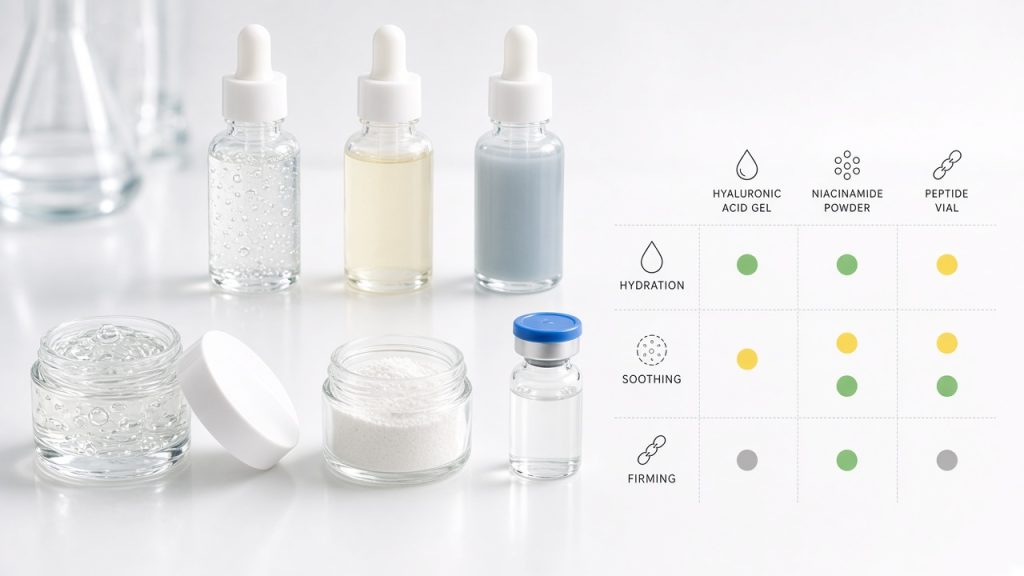
Quick Answer: Dipeptide Diaminobutyroyl Benzylamide Diacetate (Syn-Ake, CAS 823202-99-9) is generally compatible in leave-on, mild-pH serums and emulsions with hyaluronic acid (HA), niacinamide, and many retinol/retinal systems — provided you add the peptide in the cool-down phase, control pH, and validate with your supplier lot. Incompatibilities usually come from heat, extreme pH, oxidizing conditions, or over-stacking actives without preservative headroom — not from HA itself.
How to Read This Compatibility Matrix
Ratings below reflect typical cosmetic lab experience reported in supplier briefs and open literature — not a guarantee for every formula. Always confirm with a pilot batch and your working-solution prep SOP.
| Co-ingredient | Typical compatibility | Formulation notes |
|---|---|---|
| Hyaluronic acid (multi-weight) | Good | Add Syn-Ake after HA hydration; avoid long hot holds; excellent in water-gel serums |
| Niacinamide (2–10% typical range) | Good to moderate | Keep pH in a mild band (~5–6.5); high urea or extreme alkalinity can stress peptides |
| Retinol / retinal | Moderate — validate | Use cool-down addition; separate oxidizing boosters; monitor color and odor over accelerated stability |
| Ascorbic acid (pure L-AA) | Caution | Low pH and redox environment can degrade peptides; consider separate AM/PM SKUs or derivatives |
| Acetyl Hexapeptide-8 (Argireline) | Good | Common pairing; watch total peptide load — see Syn-Ake vs Argireline comparison |
| Phenoxyethanol / mild preservative blends | Good | Ensure preservative system is validated after peptide addition |
| Strong anionic surfactants (SLS-heavy wash-off) | Poor for peptide value | Rinse-off contact time limits leave-on peptide benefits |
| Metal-chelating excess (EDTA high levels) | Usually acceptable | Follow supplier guidance; extreme chelation stacks are rarely needed in peptide serums |
Hyaluronic Acid + Syn-Ake Serums
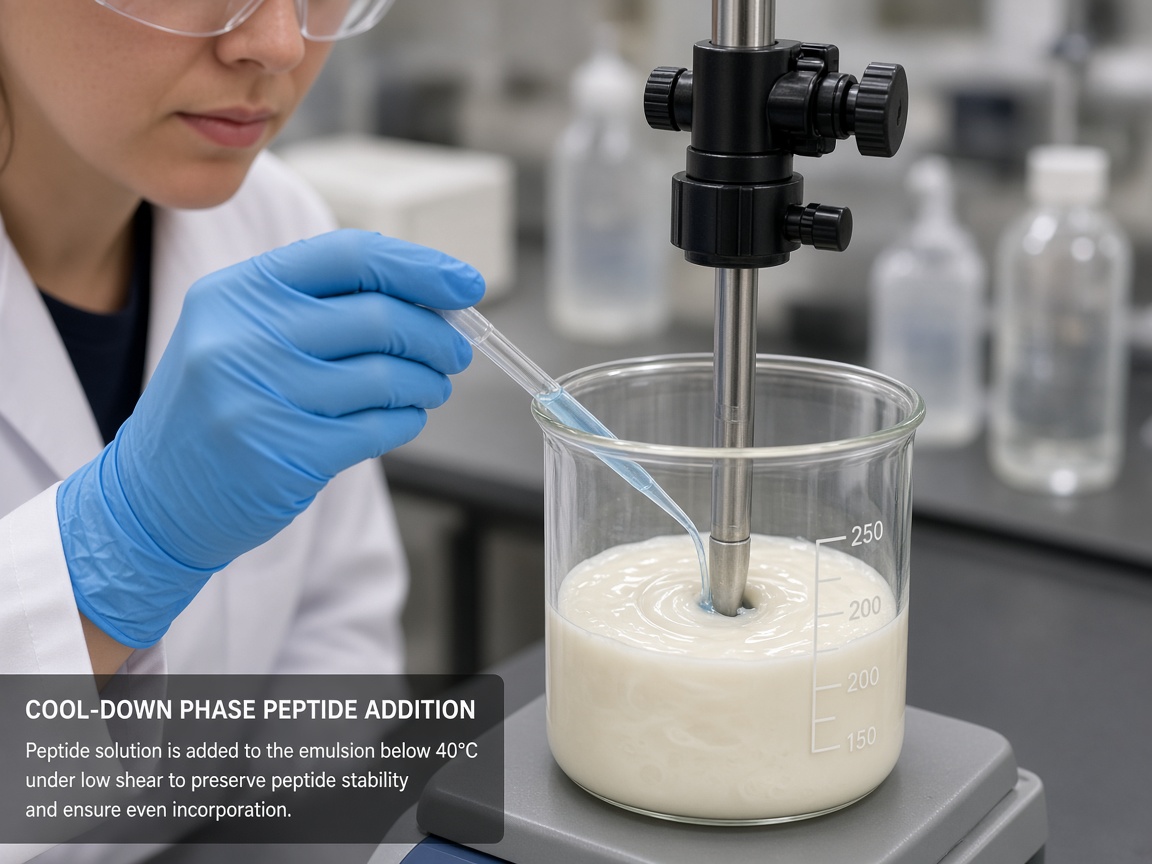
HA systems are among the easiest vehicles for Syn-Ake because they are water-rich, mild, and leave-on. Dissolve or disperse HA first, complete emulsification if applicable, then pre-dilute Syn-Ake in a small amount of water or humectant before folding in.
- Typical starting point in literature/supplier ranges: Syn-Ake solution equivalent ~1–4% in a HA serum — adjust to your COA basis.
- Avoid reheating finished bulk after peptide addition.
- Storage guidance: raw material storage.
Niacinamide + Syn-Ake
Niacinamide is widely paired with peptides in multi-task serums. The main risk is not chemical incompatibility but marketing overload — too many hero actives at max use levels increases irritation reports and stability burden.
| Check item | Recommendation |
|---|---|
| pH after niacinamide | Target mild band; recheck after 24 h |
| Order of addition | Niacinamide in water phase; Syn-Ake at cool-down |
| Preservative | Revalidate MIC after changing peptide level |
| Claim copy | Appearance-based lines only — not medical niacinamide drug claims |
Retinol / Retinal + Syn-Ake
Retinoids introduce oxidation sensitivity and low pH in some systems. Many brands either use a buffered retinoid ester at modest level or split into PM retinoid / AM peptide routines. If co-formulating, keep Syn-Ake addition last and run 40 °C / 4-week accelerated screens.
FAQ
Does hyaluronic acid degrade Syn-Ake?
HA itself does not typically degrade this peptide. Heat, pH extremes, and microbial stress are the usual culprits.
Can I put Syn-Ake in a niacinamide 10% serum?
Many labs do at mild pH. Run compatibility and preservative efficacy on your exact base.
Is retinol incompatible with all peptides?
Not universally — but retinoid systems demand extra stability work. Pilot before claiming a single hero serum does everything.
What pH is safest for Syn-Ake?
Supplier literature often cites roughly pH 5–7 for leave-on products. Details: formulating guide.
Can Syn-Ake go in an oil serum?
Peptides need aqueous solubility or a supplier-designed solution. Pure anhydrous oils without water phase are usually unsuitable unless using a compatible pre-dilution.
Where do I document compatibility for OEM customers?
Include your matrix in the PIF/TDS pack and link to OEM sourcing checklist.
Related Resources
- What is Dipeptide Diaminobutyroyl Benzylamide Diacetate (Syn-Ake)?
- The Science Behind Syn-Ake (CAS 823202-99-9)
- Formulating Syn-Ake: Use Level, pH, Cool-Down & Argireline Pairing
- Writing Honest Syn-Ake Claims Language
- Syn-Ake Manufacturing & Quality Control
- Syn-Ake in Expression-Line Cosmetics
- Dipeptide Diaminobutyroyl Benzylamide Diacetate product page (CAS 823202-99-9)
- Cosmetic peptides category
- Contact Monuo Chemical for COA / quotation
- Syn-Ake vs Argireline comparison
- Working solution preparation guide
- Emulsion troubleshooting with Syn-Ake
Disclaimer
This page is for cosmetic formulation education and B2B sourcing context. Use levels cited are typical literature or supplier-range starting points, not guaranteed recipes. Finished-product claims, labeling, and regulatory compliance remain the customer’s responsibility. Verify each lot against the supplied COA and SDS. Do not use medical, injectable, or drug claim language for topical peptide marketing.