
1.1
Agar is one of the oldest known plant gums. In Japan, it is called kanten. In French- and Portuguese-speaking countries it is also known as gelosa. The term “agar-agar” originates from Malay, while “agar” is the most widely accepted name.
In Japan, agar is believed to have been discovered by Minoya Tarozaemon in 1658. According to legend, a Japanese emperor and his royal entourage lost their way in the mountains during a snowstorm and took shelter at a small inn. The innkeeper received them with great courtesy and served a seaweed jelly for dinner. Whether because too much had been prepared or because the taste was less than pleasing, some of the jelly was discarded outdoors. The severe overnight cold froze it; the next day, after thawing and draining, it broke into a loose, crackled mass. The innkeeper boiled this residue with water and was astonished to find that the seaweed jelly could be reformed.
As a distinctive food ingredient, agar has a long history in China. It is commonly found in yogurt, soft candies, and canned foods. It is extracted and separated from large marine algae such as Gelidium, Gracilaria, and Porphyra. Regions including Shandong, Fujian, Guangdong, and Hainan have favorable marine resources and climate conditions suitable for growing these algae and are major agar-producing areas in China. With continuous process improvement and rising product quality, agar is exported worldwide and widely used in food processing, microbial culture, and tissue culture.

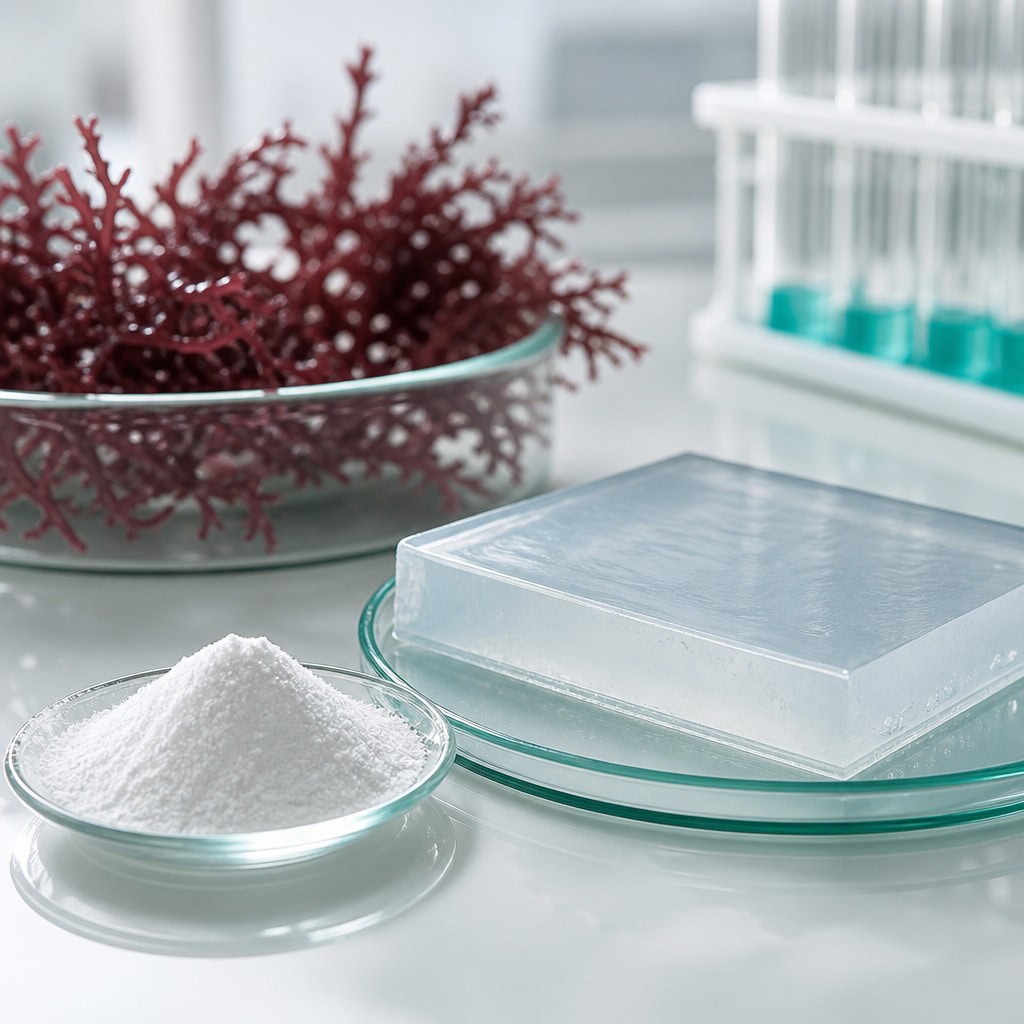
Figure 1. Red algae used for agar production
1.2 Production and Applications of Agarose
Agar consists of two fractions: agarose and agaropectin. Agarose is an electrically neutral polysaccharide. Agaropectin has poorer gelling performance and contains negatively charged groups, mainly sulfate and pyruvate groups. In 1937, Araki first isolated agarose from agar, but it was not until 1961, when Hjerten demonstrated its outstanding performance, that agarose attracted broader attention and industrial production began.ing patented technology, Sunma produces HyAgarose low-EEO agarose as an important alternative.
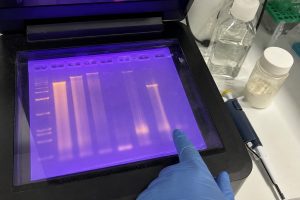
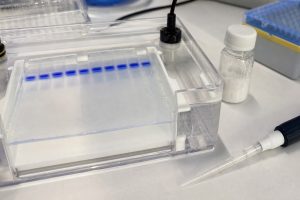
Agarose is widely used in nucleic acid electrophoresis, immunoelectrophoresis, and the separation of biomacromolecules.
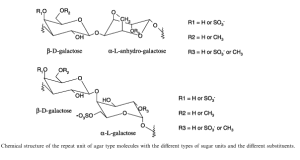
Figure 2. Chemical structure of the repeating units in agar, including different sugar units and substitutions
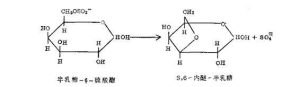
Figure 3. Alkaline treatment converting galactose-6-sulfate into 3,6-anhydro-galactose
2.Chemical Structure
Agarose is a linear polymer composed of repeating agarobiose units, each consisting of 1,3-linked β-D-galactose and 1,4-linked 3,6-anhydro-α-L-galactose. The molecular weight of agarose is approximately 120,000, corresponding to about 400 agarobiose units (or about 800 monosaccharide units). The 1,3-α linkages are more readily hydrolyzed by enzymes (e.g., Pseudomonas atlantica), yielding neoagarobiose. The 1,4-β linkages are more readily hydrolyzed by acid, yielding agarobiose units.
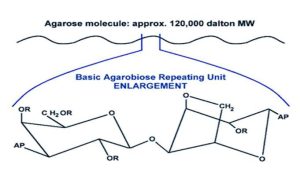
Figure 4. Structural unit of agarose: agarobiose
2.1 Importance of Substituents on the Four Potential Free Hydroxyl Groups of Agarobiose
If R = H, the hydroxyl group is free for derivatization (for example, crosslinking or activation for ligand attachment in affinity chromatography).
If R = CH₃ is present, the coupling capacity of agarose is reduced.
If R = SO₃ or a pyruvate group is present, both crosslinking and coupling/activation capacity (for affinity chromatography) are further weakened.
2.2 Electroendosmosis (EEO)
In theory, agarose is electrically neutral. In practice, however, small amounts of polar residues such as pyruvate and sulfate groups are still found. These may originate from residual agaropectin after agarose preparation. It has also been suggested that, depending on the seaweed species used for agar production, very small amounts of sulfate and pyruvate groups may be attached to the agarose structure itself. Minimizing electronegative components has always been a primary goal of agarose manufacture, yet no method can produce agarose completely free of negative charges. Even when two or three fractionation methods are combined, these groups cannot be fully eliminated. Therefore, the theoretical structure of agarose is more of an ideal model: finer fractionation can approach it more closely, but in practice it may not exist in a completely pure form in agar or agarophyte seaweeds.
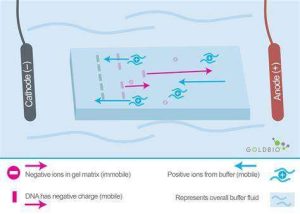
If an agarose gel carries excessive negative charge, convection develops under a DC electric field during electrophoresis, affecting migration and separation. This is observed as electroendosmosis and protein adsorption. Although the gel itself does not migrate toward the anode, water in the gel moves toward the cathode under the influence of hydronium ions, and neutral molecules in the sample move with the water. Electroendosmosis complicates electrophoresis; more importantly, it generates hydrostatic pressure heads,causing water to seep out at one electrode while the other becomes depleted, damaging gel structure and disrupting field uniformity.
3.Gel Formation and Structure
Agarose generally dissolves in water when heated above 90°C and forms a good semi-solid gel when cooled to 35–40°C. This property is the main basis for its many applications.
The gelation process starting from a solution (colloidal sol) is illustrated in Figure 6: beginning from a random-coil conformation, left-handed double helices form via hydrogen bonding and then aggregate into the macroscopic network that gives the gel its rigidity.
A fundamental feature of agar and agarose gels is “gelation hysteresis.” Upon cooling, agar or agarose gels form at temperatures between 32°C and 43°C, depending on the seaweed used (which determines the variable number of methyl groups). However, once a fully formed gel is heated, temperatures above 85°C are required to melt the gel back into a sol. Compared with other algal gums, such a large difference between gelling and melting temperatures is exceptional. This can be explained by more extensive hydrogen bonding and the lack of sulfate groups, resulting in a helical pitch much shorter than that of carrageenan and, conversely, no cation reactivity.
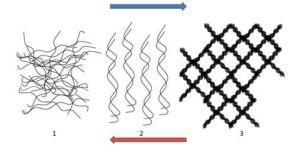
Figure 6. Agarose gelation process: (1) random-coil conformation; (2) double-helix formation; (3) helix aggregation into a porous network. Blue and red arrows indicate decreasing and increasing solution temperature, respectively.
- Quality Standards
4.1 Typical Quality Specifications for Agarose
| Item | Specification |
| Product name | Low EEO Agarose |
| CAS | 9012-36-6 |
| Appearance | White powder |
| Solubility | 1 g dissolved in 100 mL water; clear and transparent gel solution |
| Gel strength | ≥1200 g/cm² (1% gel) |
| Electroendosmosis (EEO, −Mr) | ≤0.13 |
| Gelling temperature | 36°C ± 1.5°C (1.5% gel) |
| Melting temperature | 88°C ± 1.5°C (1.5% gel) |
| Sulfate (SO₄²⁻) | ≤0.15% |
| Moisture | ≤10% |
| Ash | ≤0.5% |
| DNase & RNase | Not detected |
| Protease | Not detected |
| Endonuclease | Not detected |
4.2 Key Aspects for Evaluating Agarose Quality
4.2.1 Physicochemical Properties
These include color, solution clarity, gelling temperature, melting temperature, moisture, ash, and gel strength.
- Standard melting temperature agarose (without chemical modification) has a gelling temperature of 36°C ± 1.5°C (1.5% gel). Chemically modified low-melting-point agarose has a gelling temperature of 26–30°C (1.5% gel).
- Agarose gel performance is commonly expressed as gel strength. A 1% gel strength value is typical; sometimes both 1% and 1.5% gel strength values are reported. Higher strength indicates better gelling performance. High-quality agarose usually has a strength above 1200 g/cm² (1% gel).
- Note that gelling temperature, melting temperature, and gel strength values are directly related to gel concentration.
4.2.2 Purity Criteria
The main task in preparing agarose from agar is to remove negatively charged groups. These groups increase electroendosmosis and enhance nonspecific protein adsorption. Therefore, sulfate content and EEO represent agarose purity: lower values indicate higher purity. Based on EEO, agarose is classified as:
- Low EEO agarose: EEO < 0.13
- Medium EEO agarose: EEO 0.16–0.19
- High EEO agarose: EEO 0.23–0.26
Different EEO grades are suited to different applications.
Agar extracted from seaweed contains soluble salts, small amounts of algal pigments and proteins, and occasionally traces of insoluble impurities; these must also be removed during agarose preparation. It is equally important to ensure that no reagents used in production remain. Even when no specific numerical limits are given, these impurities still reflect product purity.
4.2.3 Suitability for Practical Applications
For nucleic acid electrophoresis, high-resolution separation of nucleic acid fragments is required, without inhibitors that interfere with downstream experiments. For macromolecule separation, the product should be suitable for preparing separation media, with low protein impurities and low nonspecific adsorption, and should meet other life-science application needs. Validation experiments are also needed to demonstrate that agarose is acceptable for biochemical techniques.
To date, no unified national or international quality standard for agarose has been established. Typical specifications for commercial agarose can be found in the Sigma (now Merck) catalog; FMC (now Lonza) also provides analytical methods in its product literature.