| Category | Property | Specification | Note / Example |
| Basic Info | Product Name | Agarose, Low Gelling Temperature | |
| CAS Number | 39346-81-1 | EINECS: 232-731-8 | MDL: MFCD00081294 | |
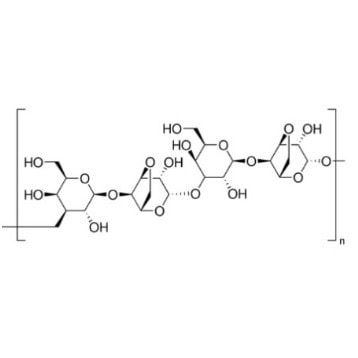
| Molecular Formula / MW | (C₁₂H₁₈O₉)ₙ / Polymer (MW variable) | ||
| Physical | Appearance & State | White to off-white powder (or 75% suspension in water) | |
| Purity / Active Content | ≥ 98.0% — Molecular Biology Grade | ||
| Melting / Gelling Point | Melting ≤ 90 °C (4% in water); Gelling ~26-30 °C | ||
| Density | 1.00 g/mL at 20 °C | ||
| Solubility | H₂O: 20 mg/mL hot, slightly hazy, very faintly yellow; refractive index 1.679 | ||
| Technical | Grade / Function | Molecular Biology Grade / Low-Melting Electrophoresis Reagent | |
| Applications | DNA/RNA gel electrophoresis, DNA fragment isolation (500 bp-20 kb), gel extraction & recovery, in-gel ligation/digestion, chromosome analysis, immunoelectrophoresis | ||
| Safety | GHS Classification | Xi – Irritant; R10 Flammable. Keep away from ignition sources. Use eye shields and gloves. | |
| HS Code | 3913.90 (Natural polymers and modified natural polymers) | ||
| Logistics | Standard Packaging | 25 g / 100 g / 500 g HDPE bottle; 1 kg / 5 kg / 25 kg fiber drum | |
| Storage Conditions | Store at 2-8°C. Keep container tightly sealed. Hygroscopic — avoid moisture. |
Frequently Asked Questions
| Category | FAQ Question | Detailed Answer |
| Basic Properties | 1. What is Agarose Low Gelling Temperature and what is its CAS number? | Agarose Low Gelling Temperature (CAS 39346-81-1) is a specially modified agarose produced by hydroxyethylation of natural agarose, extracted from the cell walls of marine red algae. This chemical modification lowers the gelling and melting temperature compared to standard agarose, while retaining high gel strength and clarity. As a linear polysaccharide with the repeating unit (C₁₂H₁₈O₉)ₙ, it forms a thermoreversible gel — liquid above the melting point and a stable gel below the gelling point. Its unique low-melting characteristic (~26-30°C gelling, ≤65°C remelting) makes it the reagent of choice for gentle recovery of heat-sensitive biomolecules like DNA. |
| Basic Properties | 2. What are the key physical and chemical properties? | • Appearance: White to off-white powder (or 75% suspension in water) • Purity: Molecular Biology Grade ≥ 98.0% • Melting Point: ≤ 90°C (4% in water, lit.) • Gelling Point: ~26-30°C • Density: 1.00 g/mL at 20°C • Flash Point: 38°C • Solubility: Soluble in hot water (20 mg/mL, slightly hazy, very faintly yellow) • Refractive Index: 1.679 • Gel Clarity: High, minimal background fluorescence • EEO: Low electroendosmosis — sharp, reproducible bands |
| Applications | 3. What are the main applications of Agarose Low Gelling Temperature? | This low-melting agarose is a staple in molecular biology laboratories: • DNA/RNA Gel Electrophoresis: Separation of nucleic acids from 500 bp to 20 kb • DNA Fragment Recovery: Melt the gel at low temperature (≤65°C) to recover intact DNA for downstream applications • In-Gel Reactions: Restriction digestion, ligation, and PCR directly on gel slices without DNA extraction • Gel Extraction: Purification of DNA fragments for cloning and sequencing • Immunoelectrophoresis: Protein and lipoprotein analysis • Chromosome Analysis: Pulsed-field gel electrophoresis (PFGE) • Cell Culture: Immobilization and separation matrices |
| Applications | 4. What is the difference between low gelling temperature agarose and standard agarose? | Standard agarose gels at ~36-42°C and melts at ~87-90°C, which can denature double-stranded DNA during recovery. Low gelling temperature agarose (LGT agarose) is hydroxyethylated to gel at ~26-30°C and remelt at ~65°C — well below the DNA melting temperature (~95°C). This means DNA fragments can be recovered from LGT agarose gels by simple melting at gentle temperatures, preserving sample integrity without the need for harsh extraction methods. LGT agarose also enables in-gel ligation and digestion since the gel stays liquid at enzyme-compatible temperatures. |
| Performance | 5. What purity levels and grades are available? | We offer Agarose Low Gelling Temperature in several grades: • Molecular Biology Grade (≥98%): DNase-free, RNase-free, protease-free — for nucleic acid analysis • Electrophoresis Grade: Optimized for routine gel electrophoresis • Standard Grade (≥95%): For general laboratory use • Custom Grades: Blends and specialized formulations on request Every batch is tested for gel strength, gelling/melting temperature, EEO, and clarity, and ships with a Certificate of Analysis (CoA). |
| Performance | 6. How does gel concentration affect separation performance? | • 0.5-0.8% gels: Best for large DNA fragments (5-20 kb) • 1.0-1.5% gels: Standard range for most applications (500 bp-5 kb) • 2.0-3.0% gels: Optimal for small fragments (100-500 bp) Low gelling temperature agarose provides resolution comparable to standard agarose at the same concentration. Gels can be re-melted and re-cast if needed. The low EEO ensures minimal sample migration distortion and sharp banding. |